
 BTC
BTC
 ETH
ETH
 LTC
LTC
 BCH
BCH
 DOGE
DOGE
 USDT
USDT
 DASH
DASH
 XRP
XRP
 USDC
USDC
 XMR
XMR
 BNB
BNB
 TRX
TRX
 SHIB
SHIB
 DAI
DAI
 ZEC
ZEC
 SOL
SOL
 ETC
ETC
 POL
POL
 XLM
XLM
 ADA
ADA
Wall Street finally woke up to the value of owning digital real estate. It isn't just about video games anymore. This evolution directly impacts the sprawling ecosystems of online gaming and casino platforms.
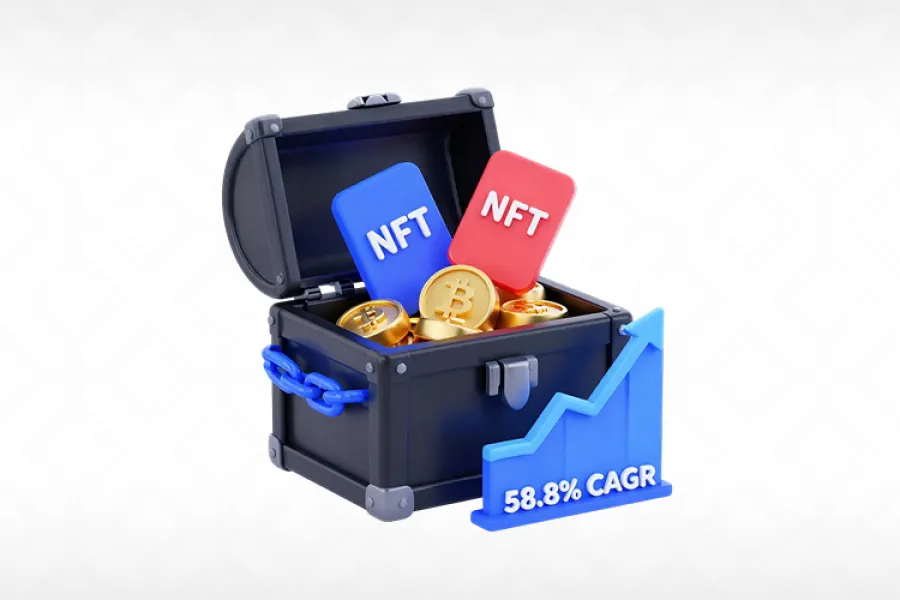
Investors stopped treating virtual environments like passing fads. These units represent yield-generating systems designed for participants wanting actual equity. When it comes to blockchain gaming, market capitalization hit $17.82B in early 2026, maintaining a 58.8% CAGR from 2025. Big studios are scrambling to adjust to what gamers actually want.
When given the option, people tend to go for assets that they can trade and that are easy to sell instead of paying a monthly fee. The data shows that the migration towards actually owning things is here to stay and isn’t changing back.
Institutional Allocators Rewriting Tactical Plans
Buying digital property provides a defensive barrier for capital allocators. Hitting that $17.82B valuation proved hesitation was a tactical error. Large funds hunt for yield compression deep within core virtual infrastructures, rotating into on-chain assets.
Gamers are completely over the endless grind of renting digital gear. If someone spends a hundred hours earning an item, they want actual ownership. For institutions, pulling a measurable return from these environments sits at the top of the priority list.
In April 2026, Reuters pointed out that Microsoft and Xbox started slashing their subscription prices to fight off some consumer fatigue. Deep discounts usually flash a bright red warning that the old rent-to-play model is gasping for air. Canny investors view that exact desperation as a reason to buy into decentralized alternatives. A fully verifiable asset offers peace of mind. Meanwhile, being locked inside a corporate walled garden feels like a trap.
The Migration From Subscription To Tokenized Access
Traditional publishers find it difficult to justify recurring fees when ownership models offer immediate liquidity. Blockchain gaming is compounding at a 58.8% clip, eating directly into the profits of legacy publishers, according to Research and Markets. A tokenized asset you can sell beats a sunk-cost subscription. Fixed costs become a liability for users wanting to move money freely between platforms.
Frictionless Payment Rails Deliver for Online Casinos
American players are dumping slow bank wires for the immediate finality of a Bitcoin transaction. Why wait days for a withdrawal when a blockchain network settles it in minutes? US commercial gaming revenue of $78.72B in 2025 shows the scale of the liquidity reserves digital currencies are tapping into, according to the American Gaming Association.
Rapid settlement is changing how users experience online activities. Every day, millions of people navigate digital hubs because they want total control. It's clear when you check out the Coinmap of the U.S. Add in digital currency, and you’ve got a solid foundation for future growth. The whole online casino industry seems to be on an upward travjectory.
Online casino revenue in the US hit $10.74 billion in 2025, which is a 27.6% increase and shows that more people are embracing digital gambling. As the market expands, it has become harder for everyday players to separate reliable platforms from the rest. That has led more people to compare the available online casinos on Casino.us to help them make better choices before placing that first bet. The site acts like a trusted reviewer, providing a good look into licensing and security standards so players can confirm that a platform is legit and licensed.
Domestic Adoption Drivers
High consumer demand for fair mechanics drives this migration. The reported $78.72B in US revenue is just the starting line for what happens when digital currency enters the chat. Here is what fuels the trend:
- Clearer rules in the US provide a safer environment for large-scale merchant integration.
- Layer 2 protocols have reduced transaction fees, making everyday use much more practical.
- Consumers consistently seek out the transparent mechanics that only a public ledger can offer.

Transparent Ledgers Establish New Benchmarks
Being transparent isn't some PR perk. If a platform expects to handle user funds, complete visibility is a non-negotiable requirement. Internet advertising revenues will top $1T in 2026, according to PwC. A public, auditable ledger is the best way to prove the house isn't stacking the deck against its players.
Centralized companies realize they cannot compete with mathematical certainty. In terms of adoption, Bitcoin stepped up as the ultimate settlement layer for anyone trusting hard math over a corporate press release. Modern players simply demand vault-like security.
Investor Takeaways For The 2026 Cycle
Institutional capital continues flowing into systems respecting player property rights. Focus on these key indicators:
- Target ecosystems built on deep liquidity and assets you can actually move between games.
- Track that staggering 58.8% growth rate in the decentralized space, according to Research and Markets.
- Watch PwC's projected $1T ad spend milestone, as that marketing push will funnel millions of new eyes into these environments.
Betting against the transparency of on-chain settlement seems like a losing hand. Investors ignoring that $17.82B valuation will simply fall behind. Interactive entertainment secured a permanent financial backbone. You can say hello to a whole new way of gaming.
