
 BTC
BTC
 ETH
ETH
 LTC
LTC
 BCH
BCH
 DOGE
DOGE
 USDT
USDT
 DASH
DASH
 XRP
XRP
 USDC
USDC
 XMR
XMR
 BNB
BNB
 TRX
TRX
 SHIB
SHIB
 DAI
DAI
 ZEC
ZEC
 SOL
SOL
 ETC
ETC
 POL
POL
 XLM
XLM
 ADA
ADA
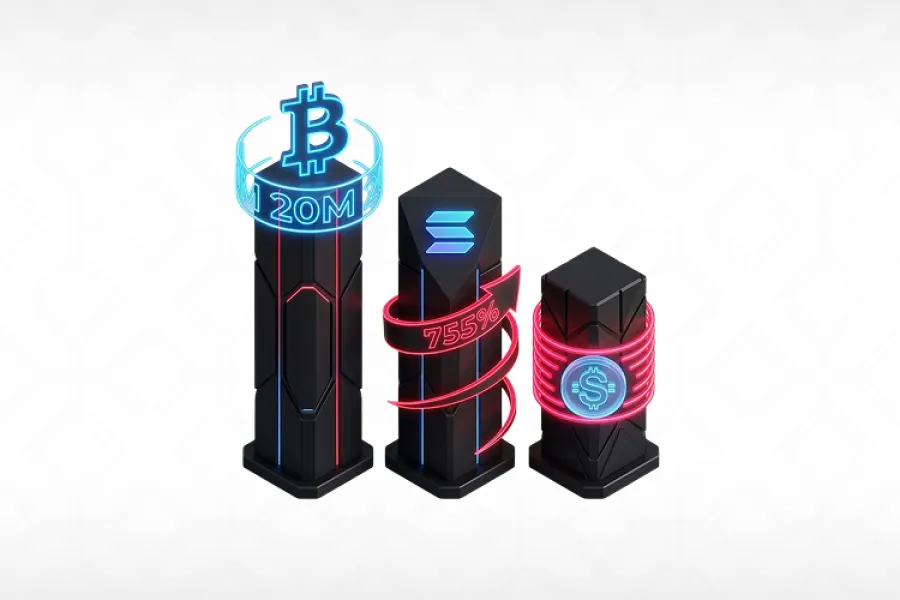
The cryptocurrency ecosystem continues to expand through technological milestones, growing payment infrastructure, and increasing transaction volumes. Recent developments highlight the progress of Bitcoin’s supply issuance, rapid payment growth on Solana, and record-breaking activity in the stablecoin market.
Bitcoin Network Mines the 20 Millionth BTC
The Bitcoin network has officially reached a major milestone: the 20-millionth Bitcoin has been mined. This leaves only 1 million BTC remaining before the protocol reaches its maximum supply cap of 21 million coins.
Bitcoin’s issuance schedule is governed by its built-in monetary policy, which gradually reduces the block reward through halving events approximately every four years. As a result, the rate at which new bitcoins enter circulation continues to slow over time.
According to current projections, the final bitcoin is expected to be mined around the year 2140. Even though most coins have already been issued, mining will continue for decades as block rewards decrease and transaction fees become a more important part of miner revenue.
The milestone highlights Bitcoin’s predictable and finite monetary structure, which remains one of the core principles behind its value proposition.
Solana Payment Volume Grows 755% Year Over Year
Meanwhile, the Solana blockchain is seeing rapid growth in payment activity. Total payment volume on the network has increased by 755% compared to the previous year.
The expansion reflects increasing adoption of Solana’s high-speed infrastructure by both crypto-native applications and traditional financial companies. Several major global payment firms—including Visa, Stripe, Worldpay, and Western Union—have begun using the Solana network for settlement experiments and payment integrations.
Solana’s architecture allows the network to process large numbers of transactions quickly while maintaining relatively low fees, making it attractive for payment-related use cases.
The growth in activity suggests that blockchains designed for high throughput and low latency are becoming increasingly relevant for real-world financial infrastructure.
Stablecoin Transfers Reach Record $1.8 Trillion
Stablecoins also continue to play a central role in the digital asset ecosystem. In February, the total volume of stablecoin transfers reached a record $1.8 trillion.
Among the major stablecoins, USDC accounted for roughly 70% of all transactions, totaling about $1.26 trillion. This placed it significantly ahead of USDT, which recorded around $514 billion in transaction volume during the same period.
Stablecoins are widely used for trading, payments, remittances, and decentralized finance activity. Their ability to combine the stability of fiat-pegged assets with blockchain-based settlement makes them one of the fastest-growing segments of the crypto market.
Why It Matters
These developments highlight several important trends shaping the cryptocurrency ecosystem:
- Bitcoin’s fixed supply continues progressing toward its long-term issuance limit.
- Payment-focused blockchains like Solana are experiencing rapid transaction growth and attracting traditional financial institutions.
- Stablecoins remain a dominant tool for digital asset transfers, with transaction volumes reaching record levels.
Together, these signals point to a broader maturation of the crypto economy, where infrastructure, payments, and monetary systems continue evolving alongside growing institutional participation.